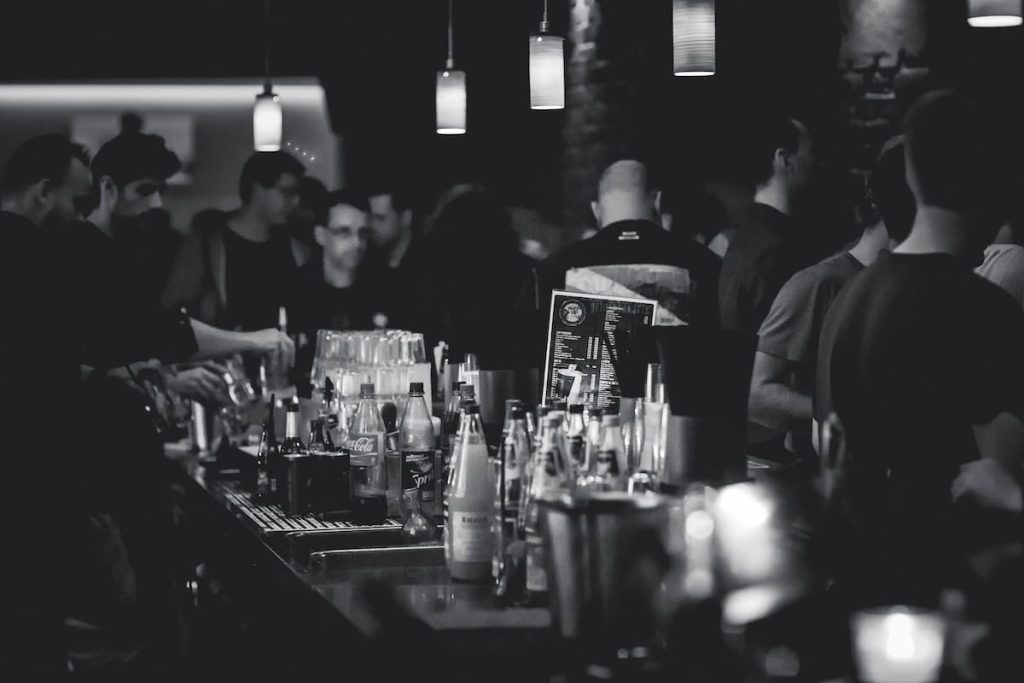
Best Playlists for Bars
There is no such thing as a single “bar playlist” that works everywhere. A cocktail bar at 7pm, a sports bar during overtime, and a dive bar at midnight are three completely different rooms with three completely different jobs for the music to do.
Get the playlist right and it becomes part of the atmosphere without anyone noticing. Get it wrong and customers feel it immediately, even if they cannot say why.
Bars also carry a different weight than restaurants when it comes to music. A restaurant music playlist plays behind a meal, mostly as background. A bar often uses music as part of the actual draw, something people can dance to, sing along with, or simply feel the energy of while they order another round.
Bar Music at a Glance
| Bar Type | Atmosphere Goal | Suitable Genres | Tempo | Typical Volume | Example Tracks |
|---|---|---|---|---|---|
| Cocktail bars | Sophisticated, curated, mood driven | Jazz, lounge, downtempo electronic, vocal standards | Slow to mid | Low (roughly 55-60 dB) | “Sway,” Michael Bublé; “The Nearness of You,” Norah Jones |
| Sports bars | Lively, communal, secondary to the game | Classic rock, pop anthems, clean hip hop | Mid to fast | Moderate, ducked under broadcast audio | “Old Time Rock and Roll,” Bob Seger; “Can’t Hold Us,” Macklemore and Ryan Lewis |
| Dive and neighborhood bars | Unpretentious, familiar, gritty warmth | Classic rock, southern rock, blues | Mid | Moderate (roughly 65-70 dB) | “Sweet Home Alabama,” Lynyrd Skynyrd; “Mannish Boy,” Muddy Waters |
| Wine bars | Relaxed sophistication, conversation friendly | Chill jazz, acoustic pop, downtempo | Slow to mid | Low (roughly 55-60 dB) | “My Funny Valentine,” Chet Baker; “Banana Pancakes,” Jack Johnson |
Build the right soundtrack for your bar
Create a licensed music experience that fits your venue, your crowd, and every stage of the night.
Best Playlists by Bar Type
Before thinking about the hour of the night, start with the identity of the bar itself. A cocktail bar and a sports bar are not competing for the same customer, so they should not sound the same.
Best Music Playlists for Cocktail Bars
A cocktail bar sells atmosphere as much as it sells drinks. The playlist needs to feel curated rather than random, matching the same attention to detail that goes into the menu.
Jazz, lounge, downtempo electronic, and vintage vocal standards all work well here. The goal is sophistication without stiffness, something that rewards attention if a customer listens closely but never demands it.
Volume should stay low enough for conversation at the bar, and tempo should stay smooth rather than jumping between fast and slow tracks. A cocktail bar playlist that suddenly throws in an upbeat pop song breaks the mood it worked to build.
Theme matters here too. A speakeasy style bar can lean further into vintage standards and swing, while a modern craft cocktail lounge often does better with downtempo electronic and contemporary lounge music.
Recommended stations: Roaring 20s Speakeasy, Crooners and Beyond, Cosmopolitan Lounge
Example tracks:
- “Sway,” Michael Bublé
- “The Nearness of You,” Norah Jones
- “Fly Me to the Moon,” Frank Sinatra
- “Feeling Good,” Nina Simone
- “Cheek to Cheek,” Ella Fitzgerald and Louis Armstrong
- “Midnight City,” M83
- “Blue in Green,” Miles Davis
- “Digital Love,” Daft Punk
- “Sunset Lover,” Petit Biscuit
- “Waltz for Debby,” Bill Evans
Best Music Playlists for Sports Bars
Sports bars have a different job. The music is not the main event, the game is, so the playlist needs to fill space without competing for attention.
Classic rock, pop anthems, and clean hip hop all hold up well in a loud room, because they are familiar enough to work in the background.
The practical trick most sports bars miss is ducking the music automatically when the broadcast audio kicks in, rather than manually turning it up and down. That keeps the room from feeling either dead silent or oddly loud during a big play.
Timing matters as much as genre selection. Music should carry the room during commercial breaks, warm-ups, and the lulls between games, then step back the moment the action picks up.
Recommended stations: Rock Throwback, Top Pop, Hip Hop (Clean)
Example tracks:
- “Old Time Rock and Roll,” Bob Seger
- “Can’t Hold Us,” Macklemore and Ryan Lewis
- “Thunderstruck,” AC/DC
- “Uptown Funk,” Mark Ronson ft. Bruno Mars
- “Livin’ on a Prayer,” Bon Jovi
- “24K Magic,” Bruno Mars
- “Song 2,” Blur
- “Empire State of Mind,” Jay-Z ft. Alicia Keys
- “We Will Rock You,” Queen
- “Can’t Stop the Feeling!,” Justin Timberlake
Best Music Playlists for Dive and Neighborhood Bars
A dive bar earns its reputation through familiarity, not polish. Regulars come back because the place feels like theirs, and the music should reinforce that rather than chase trends.
Classic rock, southern rock, and blues are dependable choices, along with alternative rock for a slightly younger crowd.
This is one setting where a slightly rougher, less polished sound actually works in the bar’s favor. A dive bar playing overly produced pop can feel out of place next to the pool table and the neon signs.
The other thing dive bars tend to get right, whether by design or by habit, is consistency over years rather than weeks. Regulars notice when the music changes, and a dive bar that quietly refreshes its rotation without abandoning the core sound keeps that sense of familiarity intact.
Recommended stations: Southern Rock Then and Now, 70s-80s Rock, Blues Classics
Example tracks:
- “Sweet Home Alabama,” Lynyrd Skynyrd
- “Mannish Boy,” Muddy Waters
- “Whole Lotta Love,” Led Zeppelin
- “Ramblin’ Man,” The Allman Brothers Band
- “The Thrill Is Gone,” B.B. King
- “Old Man,” Neil Young
- “Gimme Three Steps,” Lynyrd Skynyrd
- “Rebel Rebel,” David Bowie
- “Sharp Dressed Man,” ZZ Top
- “Smokestack Lightning,” Howlin’ Wolf
Best Music Playlists for Wine Bars
Wine bars sit closer to a restaurant than a traditional bar in terms of pace. Guests linger over a glass and a conversation, so the music needs to support that instead of pushing energy.
Chill jazz, acoustic pop, and downtempo electronic all fit the mood. Keep the volume low enough that two people at a small table never have to raise their voices, and favor instrumental or lightly vocal tracks that will not compete with dinner conversation.
Wine bars also tend to see a wide range of ages and backgrounds in the same room, more so than a sports bar or a dive bar. Genres that skew neither too current nor too dated, like classic jazz standards or well produced acoustic tracks, tend to hold up best across that mix.
Recommended stations: Chill Jazz, Acoustic Pop, Balearic
Example tracks:
- “My Funny Valentine,” Chet Baker
- “Banana Pancakes,” Jack Johnson
- “Dream a Little Dream of Me,” Ella Fitzgerald
- “Holocene,” Bon Iver
- “Águas de Março,” Elis Regina and Tom Jobim
- “Northern Sky,” Nick Drake
- “Autumn Leaves,” Bill Evans
- “Coffee,” Sylvan Esso
- “Big Jet Plane,” Angus and Julia Stone
- “La Vie en Rose,” Louis Armstrong
How Bar Playlists Should Shift Through the Night
Bar type sets the genre. Time of night sets the pace. The same venue often needs three or four different energy levels between opening and close, and a playlist that stays flat all night misses most of what music can do for a bar.
| Time of Night | Atmosphere Goal | Suitable Genres | Tempo | Typical Volume | Recommended Stations |
|---|---|---|---|---|---|
| Early evening warm up | Calm, welcoming, low-key | Soft jazz, chill pop, lounge | Slow to mid | Low | Chill Pop, Smooth Jazz Instrumentals, Cosmopolitan Lounge |
| Peak hours | High energy, sociable, immersive | Dance, upbeat rock, high energy electronic | Mid to fast | Moderate to high | Pop Dance, Rock Party, Electronica Party |
| Last call | Winding down, relaxed, gentle | Mellow soul, chill alternative, late night jazz | Slow to mid | Low to moderate | Mellow Soul Hits, Chill Alternative Rock, Blue Jazz |
Early Evening Warm Up
The first hour or two usually has fewer people and a quieter mood, often a mix of after-work regulars and early arrivals. This is the time for mellow, welcoming music rather than anything that demands attention.
Soft jazz, chill pop, and lounge tracks work well here. Keeping the energy low at this stage also gives the night somewhere to build toward, rather than starting at full volume with nowhere left to go.
This is also the window where staff have the most control over first impressions. A customer walking in to a calm, well chosen soundtrack forms a different opinion of the bar than one walking into something loud and jarring before the room has even filled up.
Recommended stations: Chill Pop, Smooth Jazz Instrumentals, Cosmopolitan Lounge
Peak Hours
As the room fills up, the music should fill up with it. This is when tempo and volume can climb, matching the noise level of a busier crowd.
Dance tracks, upbeat rock, and high energy electronic all suit peak hours. This is also the stretch where a bar’s identity should come through most clearly, whether that means leaning further into rock, dance, or whatever else defines the venue.
Transitions matter more here than at any other point in the night. Moving from a warm-up playlist into peak hours works better as a gradual climb over thirty minutes or so, rather than a sudden jump that catches the room off guard.
Recommended stations: Pop Dance, Rock Party, Electronica Party
Last Call
As the night winds down, the music should wind down with it, gently rather than abruptly. A sudden switch from high energy dance tracks to something slow can feel jarring for the customers still finishing their drinks.
Mellow soul, chill alternative, and late night jazz all work as the room empties. Lowering the volume slightly alongside the tempo shift also helps signal that the night is winding down, without needing an announcement over the speakers.
Recommended stations: Mellow Soul Hits, Chill Alternative Rock, Blue Jazz
For a closer look at how energy should move across a full shift, see the guide on setting the tone from opening to last call.
How to Build a Bar Playlist That Actually Works
Picking the right genre is only half the job. A playlist also needs to hold up over hours of play, night after night, without becoming stale or obvious.
Aim for real length and variety. A playlist that repeats within a single shift is noticeable to staff long before customers pick up on it. A few hours of unique tracks per station goes a long way.
Read the room and adjust. A playlist is a starting point, not a fixed rule. If the crowd skews older on a Tuesday and younger on a Friday, the music should shift with it rather than staying identical every night.
Keep it fresh without losing the core. Rotating in new tracks around a familiar base keeps the sound current without changing the bar’s identity overnight. Swapping out an entire playlist all at once tends to feel disorienting to regulars.
Match volume to the moment, not the clock. A schedule is a useful starting point, but a slow Tuesday and a packed Friday at the same hour need different treatment. Walk the room occasionally rather than trusting a fixed setting.
Separate zones where it makes sense. A patio, a main bar, and a quieter back room often benefit from different energy levels, even within the same venue and the same night.
Watch for staff fatigue, not just customer reaction. Staff hear the playlist for an entire shift, several nights a week, while any single customer only hears it for an hour or two.
Stick to clean versions in a public setting. Music playing on a public sound system reaches everyone in the room, including customers who might not expect explicit language. Sticking to clean edits, especially for hip hop and pop stations, avoids awkward moments without limiting genre choice.
FAQ About Bar Playlists
What is the best music for a bar?
It depends on the type of bar and the time of night. Cocktail bars suit jazz and lounge, sports bars suit classic rock and pop anthems, dive bars suit classic rock and blues, and wine bars suit chill jazz and acoustic pop.
What music works best for a sports bar?
Classic rock, pop anthems, and clean hip hop, kept in the background and ducked automatically when broadcast audio is active.
What music works best for a cocktail bar?
Jazz, lounge, downtempo electronic, and vintage vocal standards, played at low volume with smooth transitions between tracks.
How loud should music be in a bar?
It depends on the bar type. Cocktail and wine bars usually sit around 55 to 60 dB to protect conversation, while sports bars and dive bars can comfortably sit around 65 to 70 dB.
How often should a bar playlist be updated?
Rotate new tracks around a familiar core every few weeks rather than replacing everything at once, since regulars notice sudden changes more than gradual ones.
Can I use Spotify or another personal streaming service in my bar?
Generally no. Personal subscriptions are licensed for private listening rather than commercial use, so they typically will not cover a business open to the public.
The Easy Way to Do This Right
Building and maintaining a playlist manually, night after night, across every shift, is a lot to ask of any bar team. It also tends to fall apart under pressure, since the person managing the music on a slow Tuesday afternoon is rarely the same person working a packed Saturday night.
A commercial music service for bars handles the curation with ready-made stations by genre and mood, scheduling that shifts automatically through the night, and the option to adjust volume and rotation without starting from scratch. For a bar with multiple shifts and multiple moods to cover in one night, that kind of setup saves a real amount of ongoing effort.
It also covers the licensing side. Streaming music through a personal account is not the same as playing it in a business open to the public, and what commercial music licensing actually covers is worth understanding before assuming a home subscription has it handled.
For bars managing more than one location, or simply looking to spend less time thinking about the playlist and more time running the room, comparing plans is a good place to start.
No single playlist works for every bar, but a curated one, matched to the venue and the hour, does more for the room than most owners give it credit for.
Make your bar sound on-brand. Try it free.
Build a soundtrack that moves naturally from early evening through peak hours and last call, without relying on staff to manage every change.