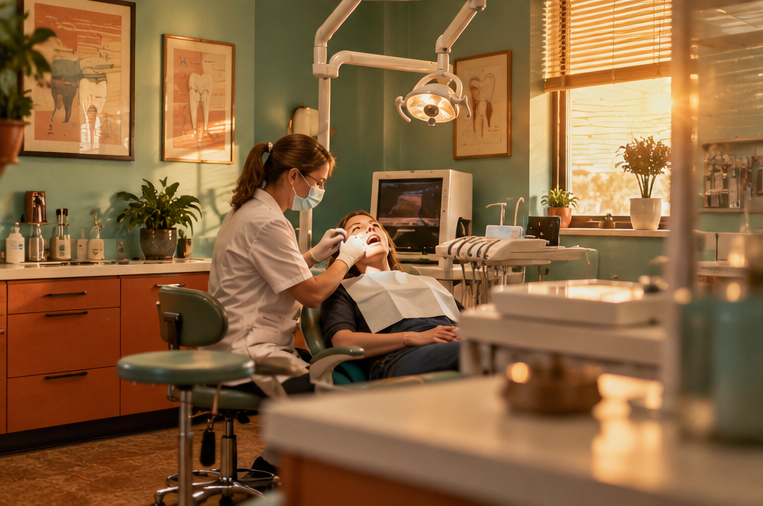
Patients form an opinion of a dental practice well before they sit in the chair. The front door, the reception desk and the waiting room all set expectations, and the music playing in the background is part of that first impression. A thoughtful playlist helps the space feel welcoming, organized and calm, which is the tone most practices are trying to set.
There is no single dental practice playlist that works everywhere. A pediatric clinic full of six-year-olds, a cosmetic studio built around long consultations and an oral surgery suite each need something different from their music. The best dental office music reflects the type of practice, the patients coming through the door and the room the music is playing in.
How to Choose a Playlist for Your Dental Practice
Before choosing a genre, it helps to be clear about what the music needs to do in your space. These are the factors that should shape the decision.
- Practice type and brand. A family practice, a cosmetic studio and a specialist surgery attract different patients and carry different expectations. The music should sound like the practice it is playing in, in the same way the décor and the front desk do.
- Patient mix and age range. Many practices see toddlers, teenagers, working adults and retirees on the same day. Soft pop, acoustic, soul and light jazz tend to travel well across generations, while very current or very niche music narrows the appeal.
- Area of the practice. Reception, treatment rooms, consultation spaces and staff areas each have a different job. One playlist piped through every room rarely suits all of them.
- Time of day. An 8am check-up, a packed lunchtime schedule and a quiet evening clinic call for different energy levels. Scheduling by time block handles this automatically.
- Lyrics and content. Clean versions only, and nothing with themes that feel awkward in a clinical setting. Instrumental music removes the risk entirely and works well wherever patients need to concentrate or talk.
- Volume and equipment noise. A study of sound levels in a conservative dentistry clinic measured chairside noise of 66 to 81 dB(A) with handpieces and suction running, and research on noise levels from dental equipment recorded high-volume suction above 84 dB in private practices. Music should never try to compete with that. It works best sitting gently underneath conversation and clinical sound.
- Tempo. Research on musical tempo and waiting perceptions found that slow-tempo background music earned higher satisfaction and relaxation ratings than fast-tempo music among people waiting in a queue, and faster music made the wait feel longer. For most patient-facing spaces, slow to mid tempo is the safer default.
Dental Practice Music at a Glance
| Practice Type | Atmosphere Goal | Suitable Genres | Tempo | Typical Volume | Example Tracks |
|---|---|---|---|---|---|
| General dental practice | Friendly, familiar, reassuring | Acoustic pop, soft pop, soul, easy listening | Mid | Low to moderate | “Banana Pancakes,” Jack Johnson; “Lovely Day,” Bill Withers |
| Cosmetic dentistry clinic | Polished, calm, spa-like | Lounge, downtempo, smooth jazz, mellow R&B | Slow to mid | Low | “Smooth Operator,” Sade; “Kiara,” Bonobo |
| Pediatric dental practice | Bright, playful, reassuring | Family-friendly pop, acoustic covers, feel-good classics | Mid | Moderate in waiting areas, low in treatment rooms | “Three Little Birds,” Bob Marley and the Wailers; “You’ve Got a Friend in Me,” Randy Newman |
| Orthodontic practice | Upbeat, current, relaxed | Clean pop, indie pop, chill pop | Mid | Low to moderate | “Sunflower,” Post Malone and Swae Lee; “Heat Waves,” Glass Animals |
| Specialist dental clinic | Quiet, steady, unobtrusive | Classical piano, acoustic guitar instrumentals, ambient | Slow | Low | “Nuvole Bianche,” Ludovico Einaudi; “River Flows in You,” Yiruma |
Build the Right Music Setup for Your Dental Practice
Create a licensed music experience that fits your patients, your treatment rooms and every part of the clinic day.
Best Dental Practice Playlists by Practice Type
Start with the practice itself. A family clinic and a cosmetic studio are not serving the same patient, so they should not sound the same.
Best Music Playlists for General Dental Practices
A general practice sees everyone. Children before school, adults on their lunch break, older patients in the afternoon, and plenty of people who would rather be somewhere else. The playlist has to feel welcoming to all of them without anyone noticing it was chosen.
Acoustic pop, soft pop, mellow soul and easy listening do this well. The common thread is familiarity. Songs patients half-recognize sit comfortably in the background, while unfamiliar or attention-grabbing tracks pull focus toward the speakers. Keep the tempo mid-range and the vocals gentle.
Volume should stay low enough that the front desk can talk to patients without leaning in. If the receptionist has to repeat an appointment time, the music is too loud.
Recommended stations: Chill Pop, Acoustic Pop, Easy Listening
Example tracks:
- “Banana Pancakes,” Jack Johnson
- “Lovely Day,” Bill Withers
- “Put Your Records On,” Corinne Bailey Rae
- “Here Comes the Sun,” The Beatles
- “Budapest,” George Ezra
- “Upside Down,” Jack Johnson
- “Island in the Sun,” Weezer
- “Dreams,” Fleetwood Mac
- “You’ve Got a Friend,” Carole King
- “Hey, Soul Sister,” Train
Best Music Playlists for Cosmetic Dentistry Clinics
Cosmetic dentistry sits closer to a spa or a boutique than a traditional clinic. Patients are often there by choice, investing in veneers, whitening or a full smile makeover, and the space is usually designed to feel premium. The music should match that polish.
Lounge, downtempo electronic, smooth jazz and mellow R&B fit the brief. Instrumentals and lightly vocal tracks work best, since consultations here can run long and involve detailed conversations about treatment plans and cost. Smooth transitions matter more than variety. A sudden jump in tempo undoes the calm, considered feel the décor is working to create.
Recommended stations: Modern Lounge – Mix (Instrumental), Mellow Downtempo, Chill R&B
Example tracks:
- “Smooth Operator,” Sade
- “Kiara,” Bonobo
- “Porcelain,” Moby
- “Breezin’,” George Benson
- “Sunset Lover,” Petit Biscuit
- “Intro,” The xx
- “Awake,” Tycho
- “By Your Side,” Sade
- “Best Part,” Daniel Caesar ft. H.E.R.
- “Cirrus,” Bonobo
Best Music Playlists for Pediatric Dental Practices
Pediatric practices have two audiences in the same room. Children need something bright and friendly, and the parents sitting next to them need something they can tolerate for the twentieth visit. Music that works for both is usually upbeat, familiar and completely clean.
Family-friendly pop, acoustic covers of well-known songs, feel-good classics and a few film favorites all suit the waiting area. Keep the energy cheerful rather than hyper. Fast, loud tracks can make a room full of children more restless, not less.
Treatment rooms are different. Once a child is in the chair, softer and slower music usually suits the moment better, so it is worth switching that zone to a gentle instrumental station such as Relaxing Guitar Instrumental.
Recommended stations: Playground, Disney Hits, The Music of Sesame Street
Example tracks:
- “Three Little Birds,” Bob Marley and the Wailers
- “You’ve Got a Friend in Me,” Randy Newman
- “Happy,” Pharrell Williams
- “Yellow Submarine,” The Beatles
- “Walking on Sunshine,” Katrina and the Waves
- “Count on Me,” Bruno Mars
- “Rainbow Connection,” Kermit the Frog
- “Somewhere Over the Rainbow / What a Wonderful World,” Israel Kamakawiwoʻole
- “Can’t Stop the Feeling!,” Justin Timberlake
- “Lean on Me,” Bill Withers
Best Music Playlists for Orthodontic Practices
Orthodontic practices skew younger than almost any other dental setting. Teenagers come in every four to eight weeks for adjustments, often for 15 or 20 minutes at a time, and many orthodontists treat several patients side by side in an open-bay clinic. The music is heard by a lot of people, often, in a shared space.
Clean contemporary pop, indie pop and chill pop give the room a current, relaxed feel that teenagers recognize without making parents wince. Because regular patients hear the same space so often, rotation matters here more than in most practices. A playlist that felt fresh in September will feel stale by the next adjustment cycle.
Recommended stations: Indie Pop, Chill Pop, Singer-Songwriter Pop Hits
Example tracks:
- “Sunflower,” Post Malone and Swae Lee
- “Golden Hour,” JVKE
- “Riptide,” Vance Joy
- “Ophelia,” The Lumineers
- “Shivers,” Ed Sheeran
- “Dance the Night,” Dua Lipa
- “Heat Waves,” Glass Animals
- “Pompeii,” Bastille
- “Adore You,” Harry Styles
- “Something Just Like This,” The Chainsmokers and Coldplay
Best Music Playlists for Specialist Dental Clinics
Oral surgery, endodontic, periodontic and implant clinics tend to handle longer and more involved appointments. Many patients arrive by referral, often for a single procedure, and the clinical team needs to concentrate. This is where the music should step furthest into the background.
Classical piano, acoustic guitar instrumentals and soft ambient music are the natural fit. No lyrics, no sudden dynamics, no build-ups. Steady, predictable pieces keep the room calm for patients and avoid distracting clinicians during detailed work. Keep the volume low and consistent from the first appointment to the last.
Recommended stations: Gentle and Melodic Classical Piano, Relaxing Guitar Instrumental, Ambient Sleep and Relaxation
Example tracks:
- “Nuvole Bianche,” Ludovico Einaudi
- “Una Mattina,” Ludovico Einaudi
- “Comptine d’un autre été, l’après-midi,” Yann Tiersen
- “Spiegel im Spiegel,” Arvo Pärt
- “An Ending (Ascent),” Brian Eno
- “Weightless,” Marconi Union
- “Arrival of the Birds,” The Cinematic Orchestra
- “Canon in D,” Johann Pachelbel
- “River Flows in You,” Yiruma
- “Prelude in C Major, BWV 846,” Johann Sebastian Bach
Find the Right Sound for Your Practice
Choose from 500+ curated stations, schedule them by room and time of day, and play fully licensed music from day one.
Dental Practice Playlists by Area
Practice type sets the overall sound. The room sets the details. Most practices have at least four distinct zones, and each one asks something different of the music.
| Practice Area | Atmosphere Goal | Suitable Genres | Typical Volume | Recommended Stations |
|---|---|---|---|---|
| Reception and waiting room | Welcoming, familiar, settled | Acoustic pop, soft pop, light jazz | Low to moderate | Chill Pop, Acoustic Cafe, Smooth Jazz Instrumentals |
| Treatment rooms | Steady, quiet, unobtrusive | Classical piano, acoustic instrumentals, ambient | Low | Relaxing Guitar Instrumental, Gentle and Melodic Classical Piano, Ambient Sleep and Relaxation |
| Consultation areas | Calm, professional, private | Instrumental lounge, chill jazz | Low | Chill Jazz, Modern Lounge – Mix (Instrumental) |
| Staff spaces | Focused, upbeat, steady | Chill beats, soft instrumental house, mellow soul | Moderate | Chill Beats, Soft Deep House (Instrumental), Mellow Soul Hits |
Reception and Waiting Rooms
The waiting room is where patients spend the most unstructured time, and where first impressions form. Warm, melodic music makes the space feel looked after, and it gives conversations at the front desk a little more privacy without anyone having to lower their voice.
Familiar acoustic and soft pop tracks work well, along with light jazz for practices with a more refined look. Keep vocals gentle so patients can fill in forms or take a phone call without distraction. There is more detail on this space in the guide to what music to play in a waiting room.
Treatment Rooms
In the treatment room, the music has the smallest margin for error. Patients are lying back, often unable to talk, and clinicians need to hear each other and concentrate. Instrumental tracks with even dynamics are the safest choice here, played at a level that sits under conversation rather than over it.
Some practices keep a short list of approved treatment room stations and let regular patients pick one. It is a small gesture, and it gives the patient a choice in a setting where they otherwise have very few.
Consultation Areas
Consultations involve treatment plans, costs and sometimes difficult news. Music in these rooms should be barely there, enough to soften the silence and keep conversations from carrying into the corridor, but never enough to compete with the discussion. Instrumental jazz and lounge stations at a low setting do this well.
Staff Spaces
Break rooms, sterilization areas and in-house labs can carry a little more energy. The team hears the practice music for eight or more hours a day, five days a week, so a separate staff zone with steady, upbeat instrumentals helps the day move without spilling into patient areas. Keep it in the same broad family as the rest of the practice so the sound feels consistent when doors are open.
Dental Practice Playlists by Time of Day
The same practice can feel very different at 8am, at 1pm and at 6pm. Scheduling music by time block lets the energy follow the day without anyone on the team having to remember to change it.
| Time of Day | Atmosphere Goal | Suitable Genres | Tempo | Recommended Stations |
|---|---|---|---|---|
| Early morning appointments | Gentle, fresh, unhurried | Acoustic, soft pop | Slow to mid | Acoustic Cafe, Chill Pop |
| Busy daytime periods | Steady, friendly, consistent | Acoustic pop, easy listening | Mid | Acoustic Pop, Easy Listening |
| Afternoon appointments | Warm, relaxed, settled | Mellow soul, chill jazz | Slow to mid | Mellow Soul Hits, Chill Jazz |
| Quieter evening sessions | Calm, low-key, winding down | Smooth jazz, downtempo | Slow | Smooth Jazz Instrumentals, Mellow Downtempo |
Early Morning Appointments
First appointments often bring commuters fitting a check-up in before work. The waiting room is quiet and patients are not fully awake, so loud or busy music feels intrusive. Light acoustic tracks at a low level set a calm, organized tone for the day.
Busy Daytime Periods
Late morning through lunch is usually when the schedule is fullest, the phones are busiest and the waiting room is at capacity. This is where consistency matters most. A steady mid-tempo station keeps the room feeling under control and covers the extra noise without adding to it.
Afternoon Appointments
Afternoons often bring a different mix of patients, including school-age children in family practices and older patients who prefer quieter hours. Warmer, slightly slower music suits the shift. Mellow soul and chill jazz feel relaxed without slowing the clinic down.
Quieter Evening Sessions
Practices that open late usually see patients coming straight from work, often tired. Evening sessions also tend to be quieter, so music is more noticeable. Smooth jazz and downtempo instrumentals at a low setting keep the space calm as the day winds down.
Transitions between time blocks should be gradual rather than abrupt. A sudden switch from acoustic pop to something noticeably different mid-appointment is the kind of change patients register.
How to Build a Dental Practice Playlist That Works
Choosing the right genre is the easy part. The playlist also has to hold up over a full clinic day, every day, without becoming repetitive or getting in the way.
Give it real length and variety. A short playlist starts repeating within a single morning. Staff notice long before patients do, and hearing the same 40 songs five days a week wears thin fast. Several hours of unique tracks per station is a sensible minimum.
Choose lyrics with care. Clean versions are a given. Beyond that, think about how a lyric lands in a dental chair. A song can be perfectly family-friendly and still be an odd choice if it happens to be about pain, needles or bad news.
Plan for every age group. Unless the practice is purely pediatric or purely specialist, the playlist needs to feel comfortable to a teenager and a grandparent alike. Broad, cross-generational styles hold up best, with more targeted music saved for zones or time slots where the audience is predictable.
Avoid sudden changes in volume or tempo. Live recordings with crowd noise, tracks with dramatic build-ups and songs with long silent intros all create jolts. Curated stations with even dynamics avoid this far more reliably than a playlist assembled by hand.
Keep it fresh without losing the core. Rotate new tracks in every few weeks around a familiar base, and refresh more often in orthodontic practices where patients return regularly. Swapping everything at once tends to feel disorienting.
Keep it consistent across the practice. The waiting room, treatment rooms and corridors can play different stations, but they should still sound like the same practice. For groups with several sites, central control makes this much easier. This guide to managing music across multiple business locations covers the practical side.
Test it with the equipment running. A volume setting that sounds right in an empty room at 7:45am can vanish under suction and handpieces at 10am, or feel too loud in a quiet consultation. Walk the practice during a normal working day and adjust room by room.
The Easy Way to Do This Right
Building and maintaining playlists by hand for every room and every part of the day is a lot to ask of a busy front desk. It also tends to drift, since the person choosing music on a quiet Monday is rarely the same person managing a packed Thursday.
A commercial music service built for dental practices handles the curation with ready-made stations by genre and mood, scheduling that shifts automatically through the clinic day, and separate zones for reception, treatment rooms and staff areas. Practices can also import their own playlists and keep everything under one account.
It covers the licensing side too. Playing music in a dental office counts as a public performance, so a personal streaming account generally will not cover it. A licensed service bundles the public performance rights a practice needs into one subscription, which removes the need to manage separate agreements.
For practices weighing up options, comparing plans is a good place to start.
Set the Tone From the Front Desk to the Chair
Schedule calm, licensed music for every room and every part of the clinic day, without anyone on the team having to manage it.
Why Patient Mix Matters When Choosing Dental Practice Music
Every recommendation above comes back to the same point. A dental practice plays to an audience that is often less relaxed than the one in a café or a shop.
A 2021 meta-analysis on the global prevalence of dental fear in adults, covering more than 72,000 people across 31 studies, estimated that about 15% of adults worldwide experience dental fear and anxiety, with roughly 12% experiencing it at a high level. A separate global review of dental anxiety in children and adolescents put the figure close to 24%.
In any waiting room, a noticeable share of patients arrive already on edge. That is why the safest playlists are steady, familiar and clean, and why the music should never be the thing that adds to the tension.
For a closer look at the research behind music and patient comfort, see this guide to music that reduces anxiety in dental offices.
FAQ About Dental Practice Playlists
What Is the Best Music for a Dental Office?
It depends on the practice and the room. General practices suit acoustic pop and easy listening, cosmetic clinics suit lounge and smooth jazz, pediatric practices suit family-friendly pop, and specialist clinics suit classical and ambient instrumentals. Treatment rooms in any practice usually work best with instrumental music.
What Music Should a Pediatric Dental Practice Play?
Bright, clean, familiar songs in the waiting area, such as feel-good classics, acoustic pop covers and film favorites. In treatment rooms, switch to softer instrumental music so the room stays calm once a child is in the chair.
Should Dental Offices Play Music With Lyrics?
In waiting areas, gentle vocals are fine as long as every track is clean and the lyrics suit a clinical setting. In treatment rooms and consultation areas, instrumentals are usually the better choice because they do not compete with conversation.
How Loud Should Music Be in a Dental Practice?
Low enough that nobody needs to raise their voice. In reception, music should be clearly present but easy to talk over. In treatment and consultation rooms, it should sit quietly in the background. Check levels with equipment running, not in an empty room.
Can a Dental Practice Play Different Music in Different Rooms?
Yes. Most commercial music services support zones, so reception, treatment rooms and staff areas can each run their own station or schedule from one account.
How Often Should a Dental Practice Update Its Playlist?
Rotate new tracks every few weeks around a familiar core, with a fuller review each quarter. Orthodontic practices, where patients visit every month or two, benefit from refreshing more often.
Can I Use Spotify or Another Personal Streaming Service in My Dental Practice?
Generally no. Personal subscriptions are licensed for private listening, not for playing music to patients in a business setting.
Final Thoughts
No single playlist suits every dental practice. The right sound depends on the type of practice, the patients it treats, the room the music is playing in and the time of day. The practices that get the most from music treat it like any other part of the patient experience, chosen with intent and reviewed now and then.
Start with the practice type, adjust by room and schedule by time of day. Keep it clean, keep it steady and keep it licensed.
Make Your Dental Practice Sound Welcoming. Try It Free.
Build a music setup that fits your patients and moves naturally from first appointment to last, across every room in the practice.
References
Silveira, E. R., Cademartori, M. G., Schuch, H. S., Armfield, J. A., & Demarco, F. F. (2021). “Estimated Prevalence of Dental Fear in Adults: A Systematic Review and Meta-Analysis.” Journal of Dentistry, 108, 103632. PubMed.
Grisolia, B. M., Dos Santos, A. P. P., Dhyppolito, I. M., Buchanan, H., Hill, K., & Oliveira, B. H. (2021). “Prevalence of Dental Anxiety in Children and Adolescents Globally: A Systematic Review with Meta-Analyses.” International Journal of Paediatric Dentistry. University of Birmingham.
Dutta, A., Mala, K., & Acharya, S. R. (2013). “Sound Levels in Conservative Dentistry and Endodontics Clinic.” Journal of Conservative Dentistry, 16(2), 121-125. Manipal Academy of Higher Education.
Study of noise levels from dental equipment and patient dental fear across dental clinic setups in Jaipur, India. PubMed Central.
Oakes, S. (2003). “Musical Tempo and Waiting Perceptions.” Psychology & Marketing, 20(8), 685-705. Wiley Online Library.