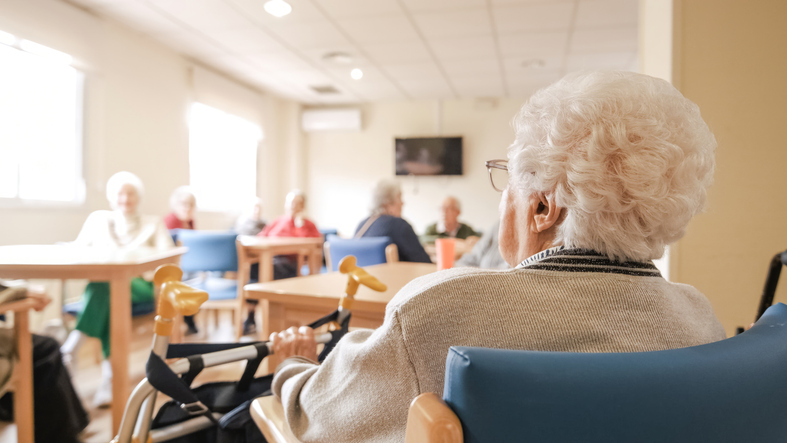
Few things reach people the way music does. At any stage of life it can shift a mood, surface a memory, or ease a difficult moment. For older adults, those effects are even more pronounced.
Music for retirement homes has been shown to reduce anxiety, improve cognitive function, and reconnect residents with their own personal history in ways that few other activities can match. It also does something practical: it shapes the atmosphere of every shared space, from the dining room to the memory care unit.
Why Music Matters in Retirement Home Settings
The relationship between music and the aging brain is well-documented. Harvard Health Publishing notes that music activates some of the broadest neural networks in the brain simultaneously, including areas tied to memory, emotion, and motor function. Keeping those networks engaged has real cognitive benefits, particularly for older adults.
A widely cited study published in Frontiers in Aging Neuroscience found that background music improved cognitive performance in older adults, with upbeat music linked to faster processing speed and a combination of upbeat and slower-paced music associated with better memory performance. That distinction matters when choosing what to play and where.
Music keeps the brain active, drawing a parallel to physical exercise. Just as the body benefits from consistent movement, the brain benefits from regular auditory engagement, especially music that carries emotional and personal resonance.
What this means in practice: music selection is not just an aesthetic decision. The tempo, familiarity, and genre of what you play can have a measurable effect on residents’ mental alertness, mood, and even pain perception.
Retirement Home Types and Their Music Needs
1. Independent Living
Who lives here
Independent living communities are home to seniors who do not require personal assistance or on-site medical care. Residents are typically active, socially engaged, and make their own lifestyle decisions. They use shared spaces like lounges, dining rooms, fitness areas, and activity rooms.
What the music needs to do
In independent living settings, music serves a social and atmospheric function. It should feel inviting and energizing without being intrusive. Residents in these communities often have strong personal music preferences, so stations that cover well-loved eras tend to land better than anything too niche.
Recommended stations
- 70s Pop: ABBA, Elton John, Stevie Wonder. One of the most broadly appealing options for this age group. Recognizable, upbeat, and consistently well-received in communal spaces.
- 60s Pop: The Supremes, Dionne Warwick, The Temptations. Warm, familiar, and melodically strong. Works particularly well during mealtimes and mid-morning socials.
- 80s Adult Contemporary: Barry Manilow, Linda Ronstadt, Whitney Houston. Radio-friendly and emotionally resonant for residents who came of age in this era.
- Adult Contemporary Mix (60s–80s): Fleetwood Mac, Phil Collins, Steely Dan. A broader sweep that works across common areas without needing much adjustment throughout the day.
- 70s and 80s Feel Good Megahits: The Emotions, Peter Frampton, Chaka Khan. A higher-energy option for activity rooms, fitness areas, and social events.
- Crooners and Beyond: Frank Sinatra, Dean Martin, Tony Bennett. A dependable choice for evening dining or quieter afternoon hours.
2. Assisted Living
Who lives here
Assisted living residents require some level of personal support or medical assistance but retain significant independence. These communities range from smaller family-style homes to larger campus-style facilities, and music is often played across multiple shared zones throughout the day.
What the music needs to do
Music in assisted living settings needs to serve more than one purpose. During meals and morning routines, it should feel calm and familiar. During activities, it can be more engaging. Toward the end of the day, it should help settle the mood. Familiarity is especially important here: research consistently shows that music tied to a person’s formative years (typically ages 10–25) triggers the strongest emotional and memory responses.
Recommended stations
- 50s-60s Vocal Jazz: Frank Sinatra, Dean Martin, June Christy. A polished, calming choice for lobbies, reception areas, and dining rooms. Almost universally comfortable for this demographic.
- 50s-60s Jazz Ballads: Soft classics and torch songs. Lower-key and intimate. Well-suited to quieter moments and late afternoon hours.
- Mellow Soul Hits: Stevie Wonder, Marvin Gaye, The Temptations. Familiar and warm without being demanding. A dependable background option across common areas.
- 60s R&B: Aretha Franklin, Otis Redding, Percy Sledge. More expressive and emotionally rich. Works well during activities and social hours where some engagement is welcome.
- Easy Listening: Oldies and classics at a gentle tempo. Useful in spaces where a calm, unobtrusive atmosphere is the priority.
- Smooth Vocal Jazz: Norah Jones, Diana Krall, Catherine Russell. A modern but accessible take on vocal jazz. Good for dining areas where conversation is part of the experience.
.
3. Memory Care
Who lives here
Memory care units are dedicated to residents living with dementia, Alzheimer’s disease, and other forms of cognitive decline. These environments require a more deliberate approach to music than any other area of a retirement home.
What the research says
Memory care is where music has the most clinically significant impact. A 2017 review published in Practical Neurology by neurologist Ronald Devere, MD, summarizes decades of research on music and dementia. Key findings include:
- Musical memory is stored differently in the brain from other types of memory. Even in advanced dementia, the ability to recognize and respond to familiar music often remains intact long after other cognitive functions have declined.
- Music can reduce agitation, one of the most common and distressing behavioral symptoms of dementia, which affects more than 50 percent of cases.
- Listening to personally meaningful music has been shown to reduce anxiety and depression in dementia patients, with some studies showing benefits lasting up to eight weeks after a music therapy session.
- Music tied to a person’s early life is particularly powerful, as the emotional bonds formed with music in younger years are deeply encoded and highly resistant to cognitive decline.
This has direct implications for playlist selection. In memory care, the goal is not to play generically pleasant music but to find music that is personally resonant. Where possible, family members or care staff should inform the station selection based on what the resident grew up with.
Recommended stations
- Classical – Gentle and Melodic Piano (Piano, Strings and Flute): Light, undemanding instrumental music. A strong default for times when residents are resting or receiving care.
- Ambient: Uplifting and ethereal soundscapes. Reduces background noise stress without introducing lyrics or strong rhythm that might cause confusion or agitation.
- Sounds of Nature: Field recordings. Grounding and calming. Particularly useful during unsettled periods or when residents are showing signs of distress.
- Ambient Sleep and Relaxation: Designed specifically for low-stimulation environments. Suitable for overnight common areas or early morning hours.
- 50s-60s Vocal Jazz: Frank Sinatra, Dean Martin, June Christy. For residents who grew up in this era, these familiar voices can trigger recognition and positive emotional responses even in advanced cognitive decline.
- Mellow Soul Hits: Stevie Wonder, Marvin Gaye, The Temptations. Familiar and warm. Useful for structured activity periods when gentle engagement is the goal.
- 60s Adult Contemporary: Barbra Streisand, Jose Feliciano, Vikki Carr. For residents from this generation, softly familiar radio hits can be more effective than unfamiliar ambient sound.
Volume matters significantly in memory care settings. Music should be audible but not prominent. The goal is to create a stable, calm sonic environment, not to engage residents in active listening unless that is the specific intention of a structured activity.
4. Skilled Nursing and Intensive Care
Who lives here
Skilled nursing and intensive care residents require constant assistance or monitoring. This includes rehabilitation centers, convalescent facilities, and nursing homes. Residents may be recovering from surgery or illness, managing chronic conditions, or requiring full-time clinical support.
What the music needs to do
In these environments, music should do two things: reduce tension and support comfort. High-stimulation or unfamiliar music can increase stress rather than reduce it. The best choices for skilled nursing settings are predictable, soothing, and free of jarring rhythmic or dynamic shifts.
This is also the setting where music’s physical benefits are most relevant. Johns Hopkins Medicine notes that music can lower blood pressure, reduce the perception of pain, improve sleep quality, and lessen anxiety. These are not trivial outcomes in a skilled nursing context.
Recommended stations
- Classical: Mozart, Brahms, Vivaldi. A solid all-purpose option for care areas. Predictable structure, no lyrics, and widely associated with calm.
- Gentle and Melodic Classical Piano: Piano, strings, and flute. More intimate and lighter than full orchestral classical. Well-suited to patient rooms and care areas where residents are at rest.
- Spa Machine: Purpose-built for relaxation environments. Low-stimulation and designed for extended background play.
- Ambient Sleep and Relaxation: Particularly appropriate for overnight or early morning hours when the goal is minimal disruption.
- Smooth Jazz Instrumentals: Joe Sample, Boney James, Peter White. Gentle enough for care settings while offering more warmth than pure ambient or classical.
- 50s-60s Jazz Ballads: Torch songs and soft classics. A slightly more human-feeling option for residents who respond better to vocal music than purely instrumental.
Physical therapy rooms within skilled nursing facilities can use a slightly different approach. During active rehabilitation sessions, older pop or rock stations can help maintain energy and motivation without being overly distracting. The 70s-80s Rock station (Led Zeppelin, The Rolling Stones, Queen) or Classic Rock Workout station can work well here.
5. Continuing Care Retirement Communities (CCRCs)
What makes CCRCs different
Continuing care retirement communities, sometimes called life plan communities, offer multiple levels of care within a single facility. A resident might move from independent living to assisted living to skilled nursing over time, without leaving the same campus. This creates a unique programming challenge: music needs to serve vastly different populations, often in close proximity.
A zone-based approach
The most practical solution for CCRCs is a zone-based music program, where different stations run in different areas of the facility simultaneously. Here is how that can look in practice:
- Lobby and reception: Adult Contemporary Mix (60s–80s) or Smooth Vocal Jazz. Welcoming and broadly appealing to residents, visitors, and staff.
- Independent living dining: 70s Pop or 60s R&B. Social and familiar without being intrusive.
- Assisted living common areas: Mellow Soul Hits or 50s-60s Vocal Jazz. Calm, familiar, running consistently throughout the day.
- Memory care unit: Ambient or era-specific station based on resident demographics. Lower volume. Consistent throughout the day and night.
- Skilled nursing: Classical or Gentle and Melodic Classical Piano in care areas. Smooth Jazz Instrumentals as an alternative.
- Fitness and rehabilitation: 70s and 80s Feel Good Megahits or 1980s Party during exercise. Calm classical during physical therapy.
- Event and activity spaces: Rotate based on the event. 60s Pop and Rock Mix or Solid Gold Disco for social evenings. Jazz Dinner for formal events.
Sound Machine’s multi-zone capability makes it possible to run all of these simultaneously without manual management. Each zone can be programmed independently and scheduled to shift based on time of day.
Getting the Music Right
There is no universal playlist for retirement homes. Resident demographics, care levels, cultural backgrounds, and regional preferences all shape what feels appropriate. The starting point is understanding which type of care each area of your facility provides, then working outward from there.
The stations listed here are a starting framework, not a fixed prescription. Pay attention to how residents respond. If a station generates conversation, visible enjoyment, or positive behavioral changes, that is useful data. If it seems to cause agitation or disengagement, adjust.
If you’re working through the practicalities of setup, scheduling, and compliance, our guide to playing music at retirement homes is a good place to start.
References
Bottiroli, S., Rosi, A., Russo, R., Vecchi, T., & Cavallini, E. (2014). The cognitive effects of listening to background music on older adults: processing speed improves with upbeat music, while memory seems to benefit from both upbeat and downbeat music. Frontiers in Aging Neuroscience, 6, 284. https://pmc.ncbi.nlm.nih.gov/articles/PMC4197792/
Budson, A. E. (October 2020). Why is music good for the brain? Harvard Health Publishing. https://www.health.harvard.edu/blog/why-is-music-good-for-the-brain-2020100721062
Devere, R. (June 2017). Music and dementia: An overview. Practical Neurology. https://practicalneurology.com/diseases-diagnoses/alzheimer-disease-dementias/music-and-dementia-an-overview/30350/
Keep your brain young with music. (n.d.). Johns Hopkins Medicine. https://www.hopkinsmedicine.org/health/wellness-and-prevention/keep-your-brain-young-with-music