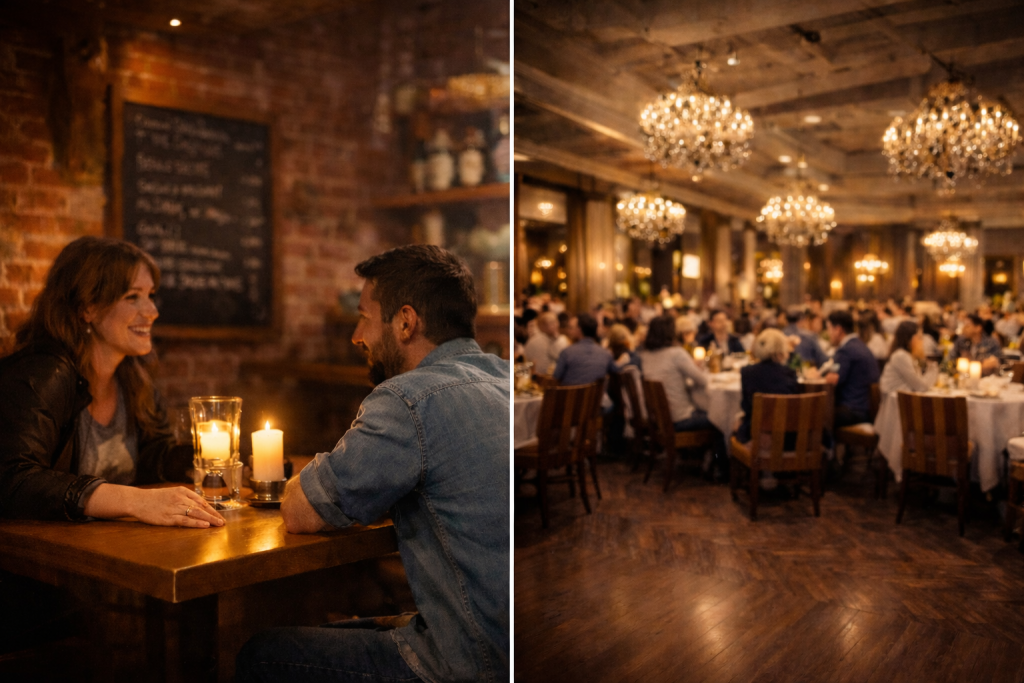
Background music is part of a restaurant’s physical environment. It interacts with room size, layout, and acoustics in ways that are easy to underestimate, which is why music for restaurants needs to be planned with the space in mind, not just the playlist. A playlist that feels warm and balanced in a 30-seat bistro can sound cluttered or overwhelming in a large dining room, while music that works in a spacious venue may disappear entirely in a compact space.
How Space Size Shapes Acoustics and Ambiance
In practical terms, small restaurants are typically under 40 to 50 seats, often with lower ceilings, closer table spacing, and limited separation between dining, service, and kitchen areas. Large restaurants may seat 100 guests or more, frequently with open-plan layouts, higher ceilings, bar areas, and multiple zones that serve different purposes at the same time.
These differences matter because sound behaves differently in each environment. In small rooms, hard surfaces such as tile floors, glass, and exposed walls reflect sound quickly. Music reaches guests almost immediately and feels louder at lower volume levels. In large rooms, sound disperses over distance, is absorbed by furnishings and people, and competes with background noise from conversation, movement, and service activity.
Ambiance goals also tend to differ. Smaller spaces usually aim for intimacy, conversational clarity, and a sense of privacy, even when tables are close together. Larger spaces often need music to provide energy, create cohesion across zones, and help mask background clatter so the room feels lively rather than chaotic.
Music Profiles for Small, Intimate Restaurants
Genre and Energy Choices
In compact dining rooms, music sits very close to the guest. Every detail is more noticeable, including vocals, instrumentation, and changes in energy. Lower-energy, mid-tempo options tend to work best because they support conversation without drawing attention to themselves.
Styles such as acoustic pop, singer-songwriter selections, mellow jazz, and calm lounge playlists fit naturally into small rooms. Instrumental or lyric-light formats are especially effective at close table distances. Instrumental pop covers, jazz dinner playlists, and jazzy calm café styles provide familiarity without the distraction of prominent lyrics.
Smaller spaces also allow for more characterful or niche choices. Genres like bossa nova, smooth vocal jazz, or vintage lounge can become part of a restaurant’s signature sound. Because guests hear more musical detail, these styles feel intentional rather than background filler, as long as they are kept at an appropriate level.
Volume, Speaker Placement, and Perceived Intimacy
Volume control is critical in small restaurants. A modest master volume combined with more localized, lower-output speakers usually creates a better result than relying on one or two loud sources. This approach reduces harsh reflections and prevents certain tables from feeling overwhelmed.
Speaker placement matters just as much as genre choice. Avoid placing speakers directly above tightly packed tables or seating clusters. Music should sit just above HVAC noise and kitchen sounds, not compete with voices. When done well, guests feel a sense of intimacy even during busy service.
Daypart changes in small rooms should be subtle. Shifting energy slightly from lunch to dinner can work, but large jumps in tempo or style are immediately noticeable and can feel disruptive in a compact space.
Music Profiles for Large, Open-Plan Dining Rooms
Genre and Tempo to Carry the Space
Large dining rooms require music that can travel. Genres with clearer rhythms, fuller arrangements, and familiar structures tend to maintain presence across distance. Adult contemporary hits, upbeat pop, alternative dinner playlists, and modern lounge styles often perform well in these environments.
Slightly higher tempos and recognizable songs help tie together bar areas, dining sections, and waiting zones. Familiarity plays a role here. In large rooms, guests are less likely to focus on individual songs, so recognizable formats help create a shared atmosphere without demanding attention.
Diverse audiences are also more common in larger venues. Mixing broader-appeal formats such as pop mix, soft rock pop hits, top jazz, or Latin pop can help accommodate different age groups and dining occasions, as long as the selections still align with the restaurant’s brand.
Sound Coverage, Zoning, and Consistency
Sound coverage becomes a structural issue in large spaces. Using more speakers at lower individual volume helps avoid hot spots near the bar and quiet zones at the back of the room. Even coverage keeps music present without forcing volume levels higher than necessary.
Zoning is especially useful in open-plan layouts. Bar and waiting areas can handle slightly more energetic tracks, while the main dining area benefits from smoother selections and marginally lower levels. These zones can share a core playlist, but the balance and emphasis should reflect how each area is used.
Consistency across zones matters more than identical tracks. When guests move from the entrance to the bar to their table, the style should feel cohesive, even if the energy shifts slightly. This creates a unified experience without making the space feel monotonous.
Practical Steps for Owners Planning or Updating Music
Assess Your Physical Space
Start with a simple checklist. Note seating capacity, ceiling height, dominant materials such as glass, tile, wood, or fabric, whether there is an open kitchen or bar, and how many distinct zones the restaurant has.
A walk test during service is one of the most effective tools. Stand near the entrance, at the bar, in the center of the room, and in the far corners. Listen for places where music disappears or becomes too loud relative to conversation. These are often the areas that need adjustment.
Match Stations and Settings to Real Conditions
For small restaurants, begin with calm, genre-focused stations such as acoustic pop, jazz dinner, or mellow lounge at a conservative level. Fine-tune by small increments across lunch and dinner rather than making dramatic changes. Limiting large swings in genre or tempo during a single service helps maintain a steady atmosphere and supports planning music throughout the day in restaurants, especially in more intimate spaces.
For many operators, the best playlists for restaurants are not single, static selections, but a set of closely related stations that shift subtly in energy throughout the day while preserving a consistent sound.
For large restaurants, broader and slightly higher-energy stations such as adult contemporary mix, pop mix, alternative dinner, or Latin rhythms tend to hold the space better. Daypart programming can help, with lighter energy for brunch, more momentum for happy hour, and controlled intensity for late service.
If the sound system allows, creating at least two volume presets can be helpful. One for service start, when the room is quieter, and one for peak periods, when background noise increases. The goal is to maintain clarity without pushing guests to raise their voices.
Aligning Size, Sound, and Brand
Background music works best when it reflects not only a restaurant’s brand and cuisine, but also its physical reality. Square footage, layout, and acoustic behavior shape how music is perceived more than many operators expect.
Thinking in terms of music profiles for small versus large rooms helps set realistic expectations when choosing the best music for a restaurant. Adjusting playlists, stations, and volume plans to suit the space is far more effective than relying on a single solution everywhere. When music is matched to the room, it supports conversation, reinforces atmosphere, and feels like a natural part of the dining environment rather than an afterthought.